Monday, July 6, 2009
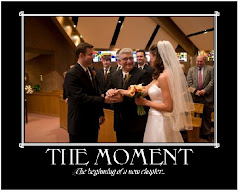
Movie Poster... good times!
Magazine Covers AND Movie Posters?!
I LOVE the Posters!
Tuesday, June 23, 2009
Voice Threads... Cool!
After looking at the pumpkin story by the kindergartners, the whole program kind of reminds me of PhotoStory. Of course, I am pretty sure that students can't comment on their peers' work like with the Voice Thread. I love that component. Looking at the site that offered 20+ ideas helped me to get those gears moving. I've been spending too much time at the beach, I guess... Anyway, here are some initial thoughts. I can't wait to toss them around with my partners!
- The What-if: When I watched the beginning of the first video, it wasn't exactly what I expected. However, having the kids play what-if with one of our Spinelli novels would be fantastic. The theme of each book ties so well into character education. I would love for the kids to hypothesize on how one decision by the central character or bystander could have re-written the entire plot. And thanks to Dottie, these kids LOVE to act. It would be fun for them to write their version and create a movie for all to see. Or they could even create a picture of a scene and comment on what they would have done in that circumstance and how it would have changed the outcome of the situation.
- Colonial Times: We already have the kids create their own family album set in the early colonial era. It would be fantastic to post pictures of the artifacts and illustrations they create and share why they chose those particular things. I would also have them explain the process they went through to create their artifact. They could even retell their family history (they have to write one as a group) and have a series of pictures illustrating their journey.
- Predictions: They could share their predictions about the literature circle book they are reading
- How-To's: This seems to really lend itself to science. Instead of a PowerPoint about the water cycle, they could explain the cycle with an illustration already posted. Using the draw tool, they can point out the main parts of the cycle and even add in additional information. Something similar could be done for the phases of the moon.
- Problem Solving: I thought this one was wonderful! The kids were so excited to explain how they arrived at their answers. Leslie has brought those amazing math vitamins to the fourth grade. They are expected to write a summary about how they arrived at their answer. Prior to that, they MUST prove their answer is correct with manipulatives or diagrams. We could use an image of their "proof" and have them explain it.
- Wordly Wise Review: The students could choose an image to post that represents one of the vocab words. Kids could guess what the word is (explaining what about the image leads them to believe that) and wait for the original student to tell them.
Bottom line - I think the kids would love this. They relish any opportunity to share their work with others. The notion that their peers will be viewing and commenting on their work will add a great deal of motivation. They want to impress each other!
Tuesday, June 9, 2009
Uses for Wordle
I must admit that I was dubious about being able to use Wordle for anything other than spelling practice. Althought I couldn't access the 13 Ways to Use Wordle, Clever Sheep or Nik Peachy links, I just did a quick google search and came across a PowerPoint entitled 25 Ways to Use Wordle in Slideshare. While many of the applications did not interest me or seemed to be too advanced for fourth graders, there were so many great ideas! I also enjoyed Jen Wagner's PPT filled with creative ideas for the younger grades. Below are approaches I would like to put to use in my classroom.
- Writing exercise: Choose a fairy tale or tall tale and type in the text. Use the word cloud as a way for them to guess which tale was used. Have them create their own version of the tale. ** I think I would use Word Sift for this one. I like that it will automatically pull the top 50 words instead of using every single word that was written. It will save me from having to decide which words I want to use.
- Editing: Cut and paste their narrative or paragraph into Wordle. Examine the large words and see if they can go back and insert synonyms. This will help them vary their word choice.
- Class Rules: I already have my kids list their ideas for our class rules. We create a word document together that is projected for the entire class to read. We then try to combine ideas and make a reasonable size list of class rules. It takes FOREVER! And most of the kids get bored. Using Wordle will greatly reduce the time it takes to shape our list. Plus the kids will be excited to see it. And I really like the idea of using the word cloud itself as a the class rules poster.
- Book Jacket: Not sure if I'll be able to work this in, but I loved the idea of having the kids create a book jacket using Wordle. It would take some big picture thinking for them to decide what words would be best to represent the book. They would also have to consider how many times to input each word to achieve the desired size.
- Summarizing/Predicting: Take non-fiction text or fiction text and create a Wordle. Display the Wordle either before or after the kids have read. Have them either predict what the main idea of the text will be or use the vocabularly words that turn out to summarize what the main idea was.
- Character Traits: Students will write down the three words that best describe a main character of selected reading. When we compile the words, the word cloud will show the traits that were most commonly listed. Discussion will follow about what events from the book caused us to attribute the traits to the character. We could also discuss whether some of the smaller words are accurate.
Wordle!
I was pleasantly surprised to find how easy it was to embed my Wordle on my wall. Having some degree of experience with Blogger, I knew to check out the layout tab and investigate the gadgets that are available. One the bottom of Wordle, I noticed they pointed out the code for posting in blogs. After copying it, I found the gadget that referred to bringing outside information in. And, viola! I must admit, I'm feeling pretty proud of myself right now. :)
I'm also pleased to see that you can just paste it into the middle of the page, too! So much Wordle...
Saturday, June 6, 2009
There Is Just So Much!!!
- The most important aspect of the definition would have to tie into the notion that information is now available to everyone. It seems to be the very essence of what is driving the Web 2.0 "movement". No longer is there one small group of people who is privileged enough to find answers. Today, people can ask their questions to a worldwide audience and learn from those who are willing to collaborate. To me, Web 2.0 means sharing information and taking control of your knowledge base.
What three important things have you found out about 21st Century learners?
- The most important thing is that they are literally wired differently than we are. I am only 29, but I did not grow up in the same world as my students. I did not email or use a cell phone until I was in college. I even remember t.v. before remote controls (albeit, vaguely!). Being the human beings that we are, it is so tempting for teachers to fall into the habits that work the best for them. More often than not, those habits were formed because of our own learning strategies. Unfortunately, we have 20 students who have now been proven to learn differently than we did.
- I've learned that they face different challenges. When I was graduating from college, America was at the top of its game. Don't get me wrong. I am ridiculously patriotic and believe that we live in the greatest country in the world. However, I will tell you that my peers and I did not feel any pressure from China and India as we pictured our prosperous futures. Watching those YouTube videos makes me realize that we have to equip our students with every advantage possible.
- And on that note, I have learned that the advantages we must give them are the higher-level thinking tools. I am still trying to figure out exactly how I view this. I can't seem to allow myself to proclaim that facts are unimportant. A lover of history, I strongly believe that it is important to understand what this country went through in its development. People SHOULD know that we have a bicameral congress. However, they can use their iPhone to find out the number of congressman in less than a minute. So, is that what we should be spending our school time on? I don't know... But I do know that we must challenge them to find a new and unique way to display this information. Or, perhaps, use the facts to draw conclusions about time period in our nation's history instead of just filling in the blanks on a test.
Name some 21st Century skills and which ones do you think are most important?
- The skills I had the most interest in were found on the Learning and Innovation Skills tab. Creativity & Innovation, Critical Thinking & Problem Solving, and Communication & Collaboration are the skills that seem the most important to me. By the age of 10, so many of my students are already programmed to come to me the instant they experience any degree of confusion. Instead of breaking down a problem or project by beginning with the information that they do have, they notice only the information they are lacking while making no attempt to find it on their own. No employer wants a worker who lacks self-direction. What will separate the successful from the unsuccessful will be their ability to find a solution where one does not exist. I believe that the 3 pairs of skills listed above are intertwined. You cannot be a problem solver without creativity. Nor will you produce results without the ability to communicate your thinking. I don't think that one of those skills is more important that the other.
Read this article and think about the assignments and assessment tools you have been using? Are you assessing 21st century skills? If so, what has worked well for you in this area? If not, what unit could you most easily change to begin to move your learners to acquiring information that will be remembered long after the test is over.
- As a fourth grade teacher, I have the luxury of not having to have averages. The only tests we administer are spelling tests and Wordly Wise tests. The rest of our assessments are project-based. Most of our projects create opportunities for the students to write about a time period or subject creatively and informatively. While I will say that I look for their ability to recreate a believable story that fits the time period, I don't know if I am truly engaging their HOTS. There is a difficult balance to be met with 10-year-olds. On one hand, they need clear directions to be able to independently work through a project. Conversely, I sometimes wonder if I am assessing their ability to follow directions instead of what they actually pulled from the experience. I remember one of my students seeing her Colonial book laying out as an example. She had to go and see if it was hers because she couldn't remember what colony she had researched. I remember feeling so defeated. She didn't even remember the name, and we had spent almost 2 months on that project!
- This is the most challenging part of integrating Web 2.0 applications into my instruction. I wholeheartedly believe in the value of these tools. I also strongly believe in the enormous benefits. I have yet to wrap my brain around how I will be able to create directions and rubrics that will guide my students through a project without completing it for them. If there isn't some component of openness, then how will they be using HOTS?